
By
Super User
Trip To The Banna People - A Stilt Walking Tribe In Ethiopia's Omo Valley.
Banna Tribe Cultural Tour in Ethiopia’s Omo Valley
Meet the Banna People – Ethiopia’s Famous Stilt-Walking Community
Discover the fascinating Banna people of Ethiopia’s Omo Valley on an extraordinary cultural expedition with Ultimate Wild Safaris.
The Banna, also known as Bena or Benna, are one of the culturally distinctive communities of southern Ethiopia. Living in the landscapes east of the Omo River, the Banna combine agriculture, cattle herding, honey collection, and pastoralism with rich traditions expressed through music, dance, ceremonies, and distinctive forms of dress and body adornment.
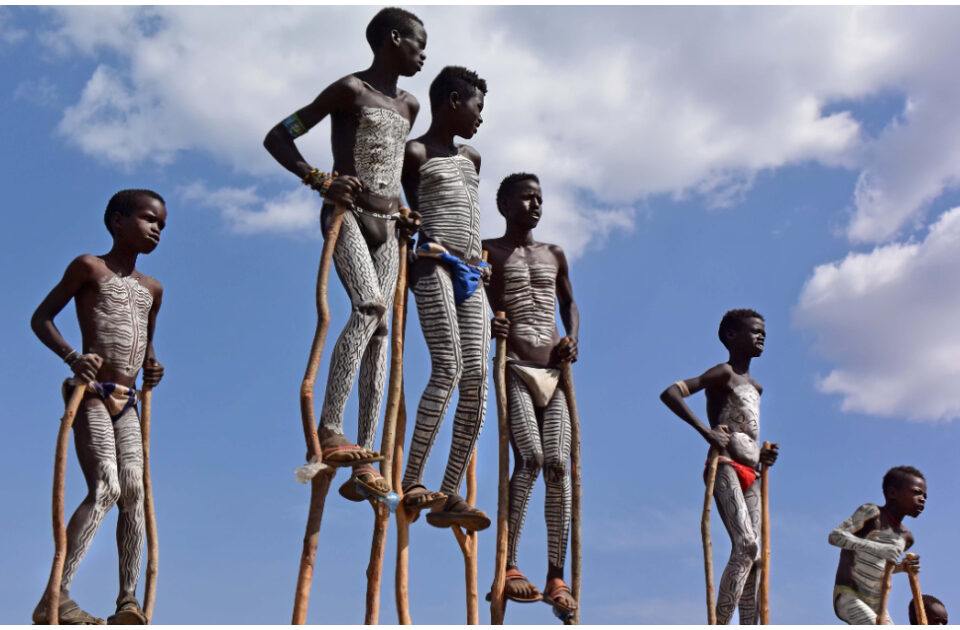
One of the most intriguing cultural traditions associated with the Banna is stilt walking, particularly among young unmarried men during cultural celebrations and ceremonies. A Banna cultural journey provides an opportunity to learn about this tradition while experiencing everyday life in one of Ethiopia’s most remarkable regions.

Experience Banna Stilt Walking
Banna stilt walking is a distinctive cultural tradition that has attracted interest from travellers and photographers visiting the Omo Valley.
Young men may demonstrate their ability to walk on stilts during community celebrations and cultural occasions. During certain ceremonial performances, participants may decorate their bodies with white markings.
The tradition is part of a wider cultural landscape in which music, dance, ritual and age-group traditions play important roles in community life.
For photographers, a responsible encounter with Banna stilt walkers can provide an unforgettable opportunity to document an unusual cultural tradition.
Who Are the Banna People?
The Banna are an indigenous community of southern Ethiopia whose traditional homeland lies in and around the highlands east of the Omo River.
They have historically combined agriculture and pastoralism, with cattle and goats providing important sources of milk, meat and materials.
The Banna also have a strong tradition of wild-honey collection, an activity that remains important alongside livestock keeping and farming.
Their culture shares certain similarities with neighbouring communities, particularly the Hamer and Bashada, while maintaining its own distinct identity.
Banna Language
The Banna speak varieties associated with the Hamer-Banna linguistic continuum, generally classified within the Omotic language family.
Some Banna communities also have contact with neighbouring languages, including Aari, particularly in areas where communities interact regularly.
The linguistic similarities between Banna and neighbouring groups reflect the long history of cultural contact across the Lower Omo region.
Banna Culture and Traditional Way of Life
Traditional Banna life is closely connected to livestock, agriculture, seasonal movement and the natural environment.
Cattle are highly valued, while goats and sheep are also kept. Camels can be used for transportation and as pack animals.
At the beginning of the rainy season, Banna farmers traditionally cultivate crops such as sorghum. During the dry season, men may travel considerable distances with livestock in search of water and pasture.
Honey collection is another important traditional activity, particularly when herders are away from their main agricultural areas.

Banna Camps and Traditional Homes
Banna families traditionally live in camps that can bring together several related households.
Tents and shelters are often arranged around a central area, with cattle brought closer to the camp at night.
Traditional shelters are constructed using flexible poles arranged in a circular structure and covered with locally available materials. The design reflects a practical response to the region's climate and the community's semi-mobile lifestyle.
A cultural visit provides travellers with an opportunity to learn how these camps are organized and how family life functions within them.
Banna Women, Beads and Traditional Adornment
Banna cultural identity is also expressed through distinctive clothing, hairstyles, jewellery and body decoration.
Women may wear beads in their hair, traditionally using natural materials such as butter in styling and grooming.
Colourful adornment, jewellery and ceremonial body decoration are important elements of cultural expression across communities of the Lower Omo Valley.
Travellers interested in African cultural photography will find the region particularly rich in visual traditions.
Banna Age Groups and Coming-of-Age Traditions
Banna society has traditionally been organized around age groups, with movement between age grades associated with important ceremonies and social responsibilities.
Coming-of-age traditions can be particularly significant for young men.
One of the best-known ceremonies associated with communities of the region is bull jumping or bull-leaping, a rite of passage connected with adulthood, social status and marriage.
Ceremonies can involve singing, dancing and participation by members of the wider community.
Because cultural practices can vary between communities and over time, visitors should experience ceremonies with respect and follow local guidance regarding photography and participation.
Bull-Leaping and Banna Marriage Traditions
Bull-leaping is traditionally associated with a young man's transition toward adulthood and eligibility for marriage.
The ceremony involves successfully moving across the backs of a line of cattle without falling. The ritual is accompanied by singing, dancing and other forms of community participation.
Marriage traditionally involves negotiations between families, with cattle and other goods forming part of bridewealth arrangements.
These traditions demonstrate the important connection between cattle, adulthood, marriage and social identity within Banna society.
Banna Music, Dance and Festivals
Music and dance are central to many Banna cultural gatherings.
Community celebrations can bring together singing, dancing, ceremonial dress and traditional performances, creating an atmosphere of collective participation.
A cultural expedition timed around a local celebration can provide a particularly memorable opportunity to experience Banna traditions, although access and dates depend on local circumstances.
Banna Pastoralism and Agriculture
The Banna have traditionally balanced farming and pastoralism.
Sorghum and other crops provide an important agricultural foundation, while cattle, goats and sheep contribute milk, meat and other resources.
During dry periods, livestock herding becomes particularly important as families respond to changing water and pasture availability.
This combination of agriculture, livestock keeping and honey collection demonstrates the community's ability to adapt to the challenging environmental conditions of southern Ethiopia.
Honey Gathering Among the Banna
The Banna are well known for their traditional honey collection.
Honey has long been an important resource, providing food and an opportunity for local exchange and trade.
For visitors, learning about traditional honey harvesting offers another fascinating perspective on how Banna communities make use of the natural environment surrounding their homes.
Banna Religion and Traditional Beliefs
Religious life among the Banna reflects both Islamic influence and continuing traditional beliefs, although practices and religious identities can vary between individuals and communities.
Islam has an established presence among Banna communities, while elements of traditional spiritual beliefs may also continue to influence people's understanding of the natural and spiritual world.
As with all cultural encounters, travellers should approach religious traditions and ceremonies respectfully and avoid making assumptions about individual beliefs.
Why Visit the Banna People in Ethiopia?
A Banna cultural tour in Ethiopia's Omo Valley is ideal for travellers looking for an authentic and immersive cultural experience.
Highlights can include:
- Meeting the Banna people
- Experiencing traditional Banna stilt walking
- Visiting Banna villages and camps
- Learning about cattle herding and agriculture
- Discovering traditional honey collection
- Experiencing music and cultural dances
- Learning about age-group traditions
- Discovering traditional marriage customs
- Observing traditional clothing and adornment
- Exploring the landscapes of the Lower Omo Valley
- Cultural and documentary photography
- Combining Banna experiences with other Omo Valley communities
Combine a Banna Cultural Tour with an Omo Valley Expedition
The Banna are one of several fascinating communities that can be encountered during a wider Ethiopia Omo Valley cultural safari.
Depending on the route and current local conditions, Ultimate Wild Safaris can combine your Banna experience with visits to other communities in southern Ethiopia, creating a deeper journey through the region's extraordinary cultural diversity.
An extended itinerary can combine cultural encounters with scenic drives, village visits, local markets, photography opportunities and exploration of the landscapes surrounding the Omo Valley.
Responsible Cultural Tourism in the Omo Valley
Cultural encounters should always be conducted with respect for local communities and traditions.
We encourage travellers to ask permission before photographing people, follow the guidance of local hosts and guides, and avoid treating cultural ceremonies simply as performances created for tourists.
Our goal is to create meaningful encounters that allow visitors to learn about local cultures while respecting the dignity, privacy and traditions of the communities we visit.
Book a Banna Tribe Cultural Safari
Ready to explore the Banna people and their unique cultural traditions in Ethiopia's Omo Valley?
Ultimate Wild Safaris can arrange tailor-made Banna cultural tours, Omo Valley expeditions, cultural photography trips and Ethiopia tribal tours based on your interests, travel dates and preferred style of travel.
Book Your Banna Cultural Experience
Ultimate Wild Safaris Ltd.
Email: This email address is being protected from spambots. You need JavaScript enabled to view it.
Mobile / WhatsApp: +256 705 087 906 / +256 760 282 342
Banna Tribe | Banna People Ethiopia | Banna Stilt Walking | Omo Valley Tribes | Ethiopia Cultural Tours | Omo Valley Safari | Ethiopia Tribal Tours
Ultimate Wild Safaris – Mother Continent Explorers
Discover the Undiscovered • Touch the Unknown • Explore the Unique Before It Disappears


