
By
Super User
Best Travel Guide To The Lotuko / Otuho / Lotuho / Otuko / Lotuka Tribe/People Of South Sudan.
Best Travel Guide To The Lotuko / Otuho / Lotuho / Otuko / Lotuka Tribe/People Of South Sudan.
Hello from the Lotuko / Otuho / Lotuho / Otuko / Lotuka of South Sudan, and you may be asking yourself who are they? The Lotuko or Latuka, also known as the Othuo, are a Nilotic ethnic group whose traditional home is the Eastern Equatoria state of South Sudan.
Their population is between 500,000 to 700,000. Oronyo, Oudo, Langairo, Tirangore, Hiyala, Obira, Abalua, illieu, Ifwotu, Imurok, Offi, Oming, Oguruny, illoli, Murahatiha, chalamini, Burung, Haforiere, Hutubak, Oriaju, Olianga, Hidonge are some of the Otuho villages. They speak the Otuho language.
The Lotuka live in settlements. There are sixteen known such villages of which Iliu, Hiyala, Lobira, etc. are the most important in terms of their population dominance. The Lotuka number approximately sixty-nine to seventy thousand according to the 1983 population census crowded in the sixteen villages and Torit town.
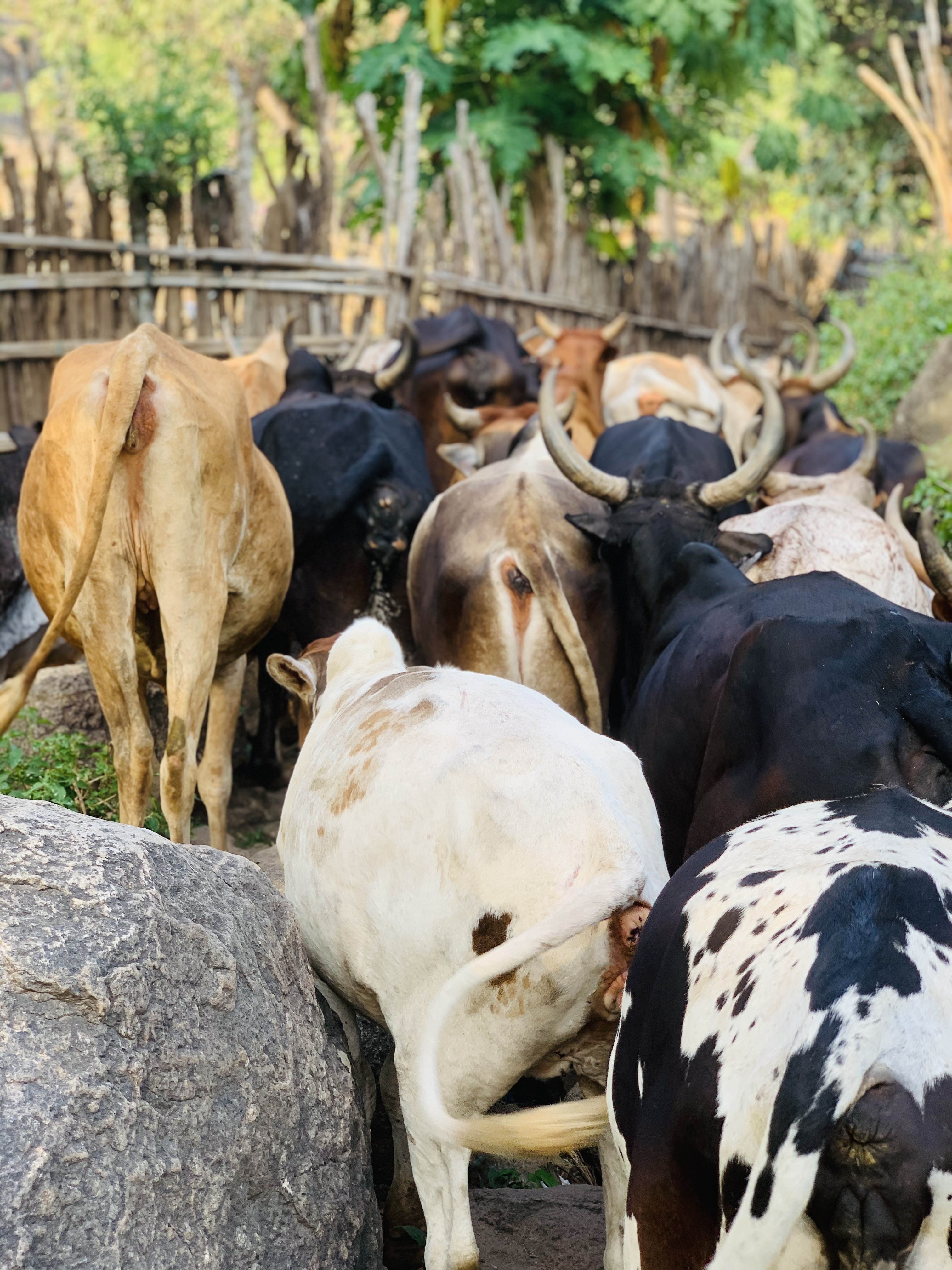
The Lotuka live in the mountains and adjoining plains. They are perfectly agro-pastoralists keeping large herds of cattle, sheep, and goats. They engage in subsistence agriculture with main crops grown to be sorghum, ground nuts, sesame, and maize in the plains, while on the hill they grow telebun, dukhn, sweet potatoes, a kind of yam, and tobacco.
The Lotuka have no traditions of an extraneous origin. Iliu, according to Lotuka’s tradition, near the south end of the Lopit Mountains was their original home. However, the lack of water drove the Lotuka to Imatari, and to near Logurun, where, a Chief called Ngalamitiko, who figures largely in their lore, ruled over them. When Ngalamitiko grew old, the people wished to replace him with his son Loghurak.
Loghurak requested them to wait till he was dead but they refused insisting that he should abdicate in favour of his son – a rebellion by the younger generation. He, therefore, sent ‘his dog’ with a message to the Chief of the Akara, urging him to destroy Imatari. The Akara, who came with a vast army only after his death, destroyed Imatari, and slaughtered the Lotuka .
The survivors fled in different directions and settled more or less in the places they now occupy between the Lopit and Dongotono Mountains, Torit, east bank Equatoria. The Lotuka history is that of internecine warfare among its different clans punctuated by combined raids by these clans on the Boya, Imatong, etc.
The basic social unit of the Lotuka is the Hang, which comprises the people who consider themselves descendants of a common ancestor in a patrilineal sequence. Individual strangers could be adapted to a hang and become part of it.

The hang and its members observe norms peculiar to it, which include hospitality, protection, and support to individual people belonging to the clan. Each kang has its particular animals, such as the elephant, crocodile, or hyena, into which it is believed that its members transform after death.
They however kill these animals the belief notwithstanding. According to Lotuka tradition the kidongi, marabat, and kobu are the kang Igagu and are therefore dominant. The hang is exogamous.
Social age and the incorporation of a homestead into a village, together with the kinship system, form the basis of the society, asinya, of the Lotuka. A person, atulo can develop his life, rights, and duties only as part of a village – amiji and under the protection of the age-set organization.
The Lotuka practice exogamy. A member of the hang Lomia, Lowudo or Lomiai may only marry into the Igago group, and vice versa. A feast is held but there is no ceremony. The bride’s father keeps about half the dowry and distributes the remainder among his and the bride’s mother’s relations.
It is customary for young men to work at the cultivation, etc., of their father-in-law for about two years. Mothers-in-law are treated with great respect. The sons-in-law use particular forms of speech when addressing them. Girls marry when they reach odwo at about fourteen. Marital relations aim at stability between families.
Naijok, a neuter form, is conceived chiefly as bringing death and disease. Everything not understood, however, is ascribed to naijok. The expression Orogho naijok is a common one. The word is also used for menstruation and a derivative noloijok for hiccups.
The Lotuka village –amiji or amangat consists of a quarter: faura – a meeting and dancing place; alore – lies in the middle of the faura and is marked with ebony stakes driven firmly into the ground. The ejulet – sacrificial stone lies in front of the alore.
The olebele is a platform under which initiated men of the amongst meet to discuss the day. The Hadufa – house of the drums has its quarter in the village.
The Lotuka houses are larger than is the case with most tribes in their vicinity.
They are built close together, with a stout ebony and bamboo palisade between them. Each man has his sheep pen adjoining his house. They keep their houses and yards very clean but throw all refuse into the streets, which soon become several feet higher than the yards.
Each quarter of the village has its dancing place, with a clump of ebony stakes in the middle on which the drums are hung. At one side is a large house in which the drums are kept and where unmarried men and strangers sleep. A fig tree is usually planted at one side, under which is a log platform where the men sit in the evening.

There are also platforms at (the street comers where the women and youths collect.
In every village, the hereditary headman sacrifices a bull or a goat at the beginning of each cultivating season and also at the re-building of the village, in the event of an epidemic, etc.
It is believed that angry words used on the occasion of the sacrifice for good crops will adversely affect the crops. Nalam or ceremonial hunt, the nature of the ensuing year is prognosticated from the characteristics of an animal killed. Children born with one testicle are buried alive; it is believed if allowed to live they will cause the death of all their male relatives.
The war equipment of a Lotuka includes a helmet of human hair, sewn together and plastered with red ochre. It is decorated with brass ornaments and a plume of feathers of a kind of weaver bird. The shield, usually of buffalo hide, is bleached white, and three or four small-bladed spears are carried.
In the old days the Lotuka considered a man a woman until he had killed. And there are few if any, middle-aged men who do not boast of a cognomen sitting by the fires. The idea is not yet extinct. A man would not deliberately attack one of his own hang even in battle, but if he killed him in the heat of action no blame was attached.
The principal function of a kobu or chief is to make rain, but among the Lotuka, as distinct from other neighboring tribes of the district with whom the kobu seldom has any power outside his function, the chiefs have always had a good deal of political power.
No one can be a really efficient rain-maker who is not descended from rain-makers on both sides. Chiefs always marry as the principal wife the daughter of a chief or rain-maker. Women have equal power with men in this respect, and there are three female rain-makers in the district.
The nongopira or ceremonial making of fire is held every sixteen years. Two straight sticks are cut. If they are weak or crooked so will be the men or women of the next generation.
All fires in the village were extinguished and re-lighted with the fire made with these sticks. On this occasion, the men of the younger generation take over the duties of military service from their seniors. They are given a collective name that they endeavor to make renowned in songs. Men above or below the age fight as volunteers.
The monyomiji or graduates are responsible for the daily running of public affairs and the well-being of the community: they keep internal peace and settle disputes. They declared edwar or state of ‘non-violence’ in which no fighting is allowed in the village. The monyomiji can fire and appoint rain-makers.
Magicians Ibwoni or Neibwoni are found in every village and behave like ordinary people while some of them smear themselves with dirt, belch loudly and repeatedly, roll their eyes and pretend to throw fits.
The Lotuka culture shows in the daily life of the village and in the art of war and warfare for which they are renowned. Cultural artifacts include the shield, the copper helmets fitted with ostrich feathers, the skin apron worn by women etc.
The drums, usually kept in the house of drums in the village, consisting of a large drum mother of all drums - for alarm nogora or honye and five other drums ahalur and egongi and the three angariok, which are usually kept together.
The Lotuka musical instruments include a large horn nature, which is two meters long and made of bamboo sticks bound together, and five small trumpets –ekangahien. Like other ethnic communities in South Sudan, most of the Lotuka literature is oral comprising folklore, stories, songs, and poems.
The Lotuka neighbor the Lopit and Pari to the north, Lokoya and Lulobo to the northwest; Acholi to the south and Logir and Dongotono to the southeast; and the Didinga and Boya to the east. The Lotuka have been known to be anti-foreigners who came to lord over them. The Arabs are particularly resented for their role in slavery.
The most spectacular development in the Lotuka land is the long-running war. This has caused much division among the Lotuka and suffering. It has led to the almost complete breakdown of law and order precipitating inter-clan warfare, cattle raids, etc. Learn more about tribes of South Sudan from here:


